

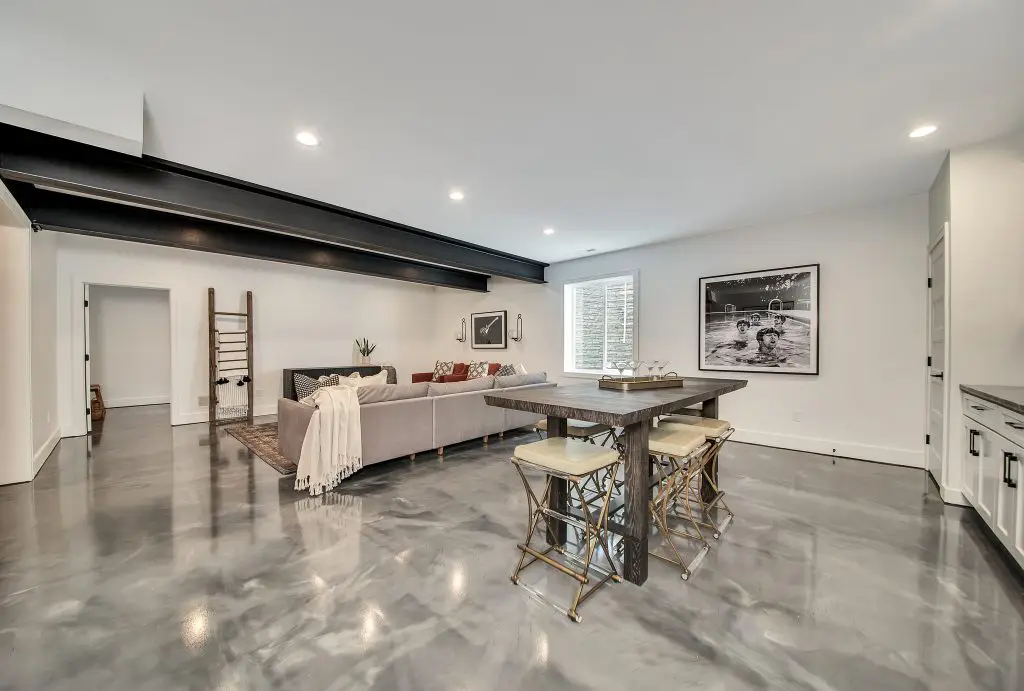
If you’re looking for a durable flooring option for your basement, epoxy flooring can provide a seamless, easy-to-maintain surface that is both practical and visually appealing. It can transform an unfinished concrete basement into a cleaner, more functional space while protecting against everyday wear, stains, and moisture exposure.
For homeowners in Vancouver, Surrey, Burnaby, Langley, Richmond, Delta, Abbotsford, and surrounding areas, epoxy flooring is particularly useful where concrete floors are exposed to moisture, dirt, storage traffic, or frequent use.
But is epoxy actually a good choice for a basement floor? How much does it cost, how long does it last, and what should you know before installation?
This guide explains everything you need to know about epoxy basement flooring, including its benefits, installation process, design options, maintenance requirements, and important considerations before choosing a coating system.
Is Epoxy Good for Basement Floors?
Yes, epoxy can be an excellent option for basement concrete floors when the concrete is properly prepared and moisture conditions are suitable for the coating system.
Epoxy creates a seamless, non-porous surface that is:
- Durable and resistant to everyday wear
- Easy to clean and maintain
- Resistant to many stains and chemicals
- Available in a wide range of colours and finishes
- Suitable for home gyms, workshops, storage areas, and finished basements
- Easier to maintain than many traditional flooring options
However, moisture must be evaluated before installation. Excessive moisture vapour coming through the concrete can cause adhesion problems, bubbling, or coating failure.
For that reason, professional surface assessment and preparation are important before applying an epoxy system.
What Is an Epoxy Basement Floor?
An epoxy basement floor is created by applying a specialized coating system over an existing concrete surface.
Epoxy is generally made by combining a resin with a hardener. Once mixed and applied correctly, the material cures into a hard, durable coating that bonds to properly prepared concrete.
Depending on the desired result, a basement epoxy system may include:
- Concrete surface preparation
- Crack and surface repairs
- Primer or base coat
- Epoxy coating
- Decorative flakes or pigments, if selected
- Protective topcoat
The final appearance can range from a simple solid colour to a decorative flake or metallic finish.
Benefits of Epoxy Basement Flooring
There are several reasons homeowners choose epoxy for basement concrete floors.
1. Durable Surface
A professionally installed epoxy system can withstand normal residential foot traffic, furniture, storage equipment, and everyday basement activity.
It is also resistant to many common sources of wear, including:
- Abrasion
- Impacts
- Dirt
- Automotive fluids
- Household chemicals
- General foot traffic
The exact durability depends on the coating system, concrete condition, installation quality, and how the basement is used.
2. Easy to Clean
One of the biggest advantages of epoxy flooring is its seamless surface.
Unlike carpet, epoxy does not trap dirt and debris between fibres. Dust, spills, and everyday messes can generally be removed with routine sweeping and mopping.
This makes epoxy particularly useful for:
- Home gyms
- Workshops
- Storage rooms
- Laundry areas
- Utility spaces
3. Moisture and Stain Resistance
Basements can experience higher humidity and occasional moisture exposure than other areas of the home.
A properly installed epoxy coating provides a dense surface that resists many common spills and stains.
However, epoxy should not be considered a solution for an active water leak or structural moisture problem.
If water is entering through walls, cracks, joints, or the foundation, the underlying problem should be addressed before installing a coating.
4. Modern Appearance
Bare concrete can make a basement look unfinished.
Epoxy gives homeowners the ability to customize the appearance of the floor with:
- Solid colours
- Decorative flakes
- Metallic effects
- Glossy finishes
- Satin finishes
- Custom colour combinations
A well-designed epoxy floor can make a basement feel cleaner, brighter, and more finished.
5. Improved Slip Resistance
Epoxy itself creates a smooth surface, but an appropriate texture or anti-slip additive can be incorporated into the system.
This can be particularly useful in areas where the floor may become wet.
Your installer can recommend the appropriate level of texture based on how the basement will be used.
6. Long Service Life
A professionally installed epoxy floor can provide many years of service when the concrete is properly prepared and the floor is maintained correctly.
The actual lifespan depends on:
- Concrete condition
- Moisture exposure
- Traffic
- Coating system
- Surface preparation
- Maintenance
How Much Does an Epoxy Basement Floor Cost?
The cost of epoxy basement flooring varies significantly depending on the size and condition of the concrete floor and the coating system selected.
Typical factors include:
- Basement floor size
- Concrete condition
- Crack and damage repairs
- Moisture testing or mitigation
- Grinding and preparation
- Coating thickness
- Decorative finish
- Protective topcoat
For that reason, a professional site assessment is more reliable than estimating the project based solely on square footage.
If you’re comparing epoxy flooring costs, see our detailed guide:
How Much Does an Epoxy Resin Floor Cost?
You can also compare specific garage flooring costs if your basement project is similar to a garage application.
What Factors Affect Basement Epoxy Flooring Cost?
1. Size of the Basement
Larger floors require more materials and labour.
However, larger projects can sometimes have a lower effective cost per square foot because setup and preparation costs are spread over a larger area.
2. Condition of the Concrete
The existing concrete has a major influence on the final price.
A floor with:
- Cracks
- Surface damage
- Oil contamination
- Old coatings
- Uneven areas
- Excessive moisture
may require additional preparation before coating.
3. Surface Preparation
Preparation is one of the most important parts of an epoxy installation.
Professional preparation may include:
- Diamond grinding
- Removal of old coatings
- Crack repair
- Surface patching
- Cleaning and contamination removal
- Moisture evaluation
A coating can only perform as well as the surface underneath it.
4. Coating System
A basic solid-colour epoxy system generally costs less than a decorative multi-layer system.
Common options include:
- Solid-colour epoxy
- Decorative flake flooring
- Metallic epoxy
- Multi-coat systems
- Epoxy with protective topcoats
5. Decorative Features
If appearance is a major priority, decorative options can increase the project cost.
Popular choices include:
- Vinyl flakes
- Metallic pigments
- Custom colour blends
- Decorative borders
- High-gloss finishes
Epoxy Basement Flooring Options
Different basement spaces may benefit from different coating systems.
Solid Colour Epoxy
Solid-colour epoxy provides a simple and clean appearance.
Best for:
- Utility rooms
- Workshops
- Storage areas
- Minimalist basement designs
It is generally one of the more straightforward epoxy options.
Decorative Flake Epoxy
Flake flooring combines a base coating with decorative vinyl flakes and a protective topcoat.
Benefits include:
- Attractive appearance
- Better visual texture
- Helps disguise minor imperfections
- Multiple colour combinations
- Suitable for high-use residential spaces
This is a popular choice for homeowners who want their basement floor to look more finished without an overly elaborate design.
Metallic Epoxy
Metallic epoxy uses specialized pigments to create a unique, three-dimensional appearance.
Every installation can have a different pattern depending on the application technique.
Best for:
- Entertainment rooms
- Luxury basement renovations
- Showroom-style spaces
- Home offices
- Feature floors
Epoxy Basement Floor Installation Process
A professional installation typically involves several stages.
Step 1: Inspect the Concrete
The existing concrete should be assessed for cracks, damage, contamination, previous coatings, and moisture conditions.
This step helps determine which preparation and coating system are appropriate.
Step 2: Prepare the Surface
The concrete is mechanically prepared to remove contaminants and create a suitable profile for coating adhesion.
Depending on the condition of the floor, this may involve diamond grinding or other mechanical preparation methods.
Step 3: Repair Cracks and Damage
Cracks, holes, spalled areas, and other surface defects may need to be repaired before coating.
Repairs help create a more uniform finished surface and address defects that could otherwise affect the coating.
Step 4: Apply the Base Coating
The selected epoxy system is applied according to the manufacturer’s specifications.
The number of coats depends on the system and project requirements.
Step 5: Add Decorative Elements
If the homeowner chooses a flake or metallic system, decorative materials are incorporated during the appropriate stage of installation.
Step 6: Apply the Protective Topcoat
A compatible topcoat can provide additional resistance to abrasion, chemicals, stains, and everyday wear.
Step 7: Allow the Floor to Cure
The floor needs adequate curing time before it is exposed to regular traffic.
Cure times vary according to the coating products, temperature, humidity, and installation conditions.
Can Epoxy Be Installed Over an Old Basement Concrete Floor?
In many cases, yes.
An existing concrete floor does not necessarily need to be new for epoxy to be installed.
However, the condition of the concrete is critical.
Older concrete may have:
- Cracks
- Previous coatings
- Surface contamination
- Moisture problems
- Weak or deteriorated areas
These issues should be identified and addressed before installation.
Read our related guide:
Can Epoxy Coating Be Applied Over Old Concrete?
What About Basement Moisture?
Moisture is one of the most important considerations when installing epoxy flooring in a basement.
Epoxy should not simply be installed over a concrete floor without considering moisture conditions.
Potential warning signs include:
- Damp areas
- White powdery deposits
- Persistent musty conditions
- Water entering through cracks
- Peeling previous coatings
- Visible moisture
If significant moisture is present, the underlying source should be investigated before coating the floor.
A professional installer can determine whether the existing conditions are suitable for the proposed coating system.
Epoxy Basement Flooring vs Other Flooring Options
Epoxy isn’t the only basement flooring option.
Homeowners may also consider:
- Vinyl flooring
- Laminate
- Tile
- Carpet
- Polished concrete
- Concrete sealers
Epoxy vs Carpet
Epoxy is easier to clean and does not absorb spills like carpet.
Epoxy vs Laminate
Epoxy provides a seamless coating directly over properly prepared concrete, while laminate is a separate flooring material.
Epoxy vs Tile
Tile provides numerous design options, but epoxy eliminates grout lines and creates a seamless surface.
Epoxy vs Polished Concrete
Polished concrete mechanically refines the existing concrete rather than covering it with a thick resin coating.
The better choice depends on the condition of the concrete, desired appearance, moisture conditions, and intended use.
Where Can You Use Epoxy Basement Flooring?
Epoxy is suitable for many different basement applications.
Home Gyms
Epoxy provides an easy-to-clean surface that can withstand regular foot traffic and gym equipment.
Workshops
The coating helps protect concrete against dirt, stains, and everyday workshop activity.
Storage Areas
A seamless floor is easier to sweep and maintain than unfinished concrete.
Laundry Rooms
Epoxy can provide a practical, easy-to-clean surface for utility areas.
Entertainment Spaces
Decorative epoxy systems can create a more polished appearance for finished basements.
Home Offices
A clean, modern floor can complement contemporary basement office designs.
Basement Epoxy Flooring Design Ideas
Your basement doesn’t have to have a plain grey floor.
Consider:
Modern Grey Flakes
Grey and charcoal flake combinations provide a clean, contemporary appearance.
Neutral Tones
Beige, tan, and earth tones can work well with traditional basement interiors.
Metallic Effects
Metallic epoxy can create a dramatic feature floor.
High-Contrast Flakes
Contrasting colours can create more visual depth and help hide everyday dirt.
Custom Colour Combinations
A professional installer can help select colours that complement walls, cabinets, furniture, and other basement finishes.
How Long Does an Epoxy Basement Floor Last?
A professionally installed epoxy basement floor can last many years, but there is no single lifespan that applies to every installation.
Factors that affect longevity include:
- Quality of concrete preparation
- Moisture conditions
- Coating system
- Traffic
- Chemical exposure
- Maintenance
- Quality of installation
Residential basement floors generally experience less demanding conditions than industrial floors, which can help extend service life.
Regular cleaning and avoiding unnecessary abuse can also help maintain the coating.
How to Maintain an Epoxy Basement Floor
One of the biggest advantages of epoxy flooring is its relatively simple maintenance requirements.
Sweep Regularly
Remove dirt and abrasive particles before they accumulate.
Mop When Necessary
Use water and a suitable mild or pH-neutral cleaning solution.
Clean Spills Promptly
Although epoxy is resistant to many stains, cleaning spills promptly is always recommended.
Avoid Abrasive Cleaning Tools
Harsh abrasives can unnecessarily wear the surface over time.
Use Mats Under Heavy Equipment
Protective mats can help distribute loads and reduce unnecessary wear in high-use areas.
Pros and Cons of Epoxy Basement Flooring
Pros
- Durable
- Easy to clean
- Seamless appearance
- Wide range of colours and finishes
- Resistant to many stains and chemicals
- Can improve the appearance of unfinished concrete
- Low routine maintenance
- Suitable for many basement applications
Cons
- Requires proper concrete preparation
- Moisture problems must be addressed
- Professional installation costs more than basic DIY paint
- Repairs in the underlying concrete may add to project cost
- The surface can be hard underfoot
- Improper installation can result in peeling, bubbling, or premature failure
The key takeaway is that epoxy performance depends heavily on preparation and installation quality.
DIY vs Professional Basement Epoxy Flooring
DIY epoxy kits can appear attractive because of their lower upfront price.
However, installing a professional-quality system involves considerably more than simply rolling epoxy onto concrete.
Professional installation may involve:
- Mechanical diamond grinding
- Concrete repairs
- Moisture evaluation
- Proper mixing
- Controlled application
- Multiple coating layers
- Protective topcoats
DIY May Make Sense If:
- The project is small
- You have experience with concrete coatings
- The concrete is in excellent condition
- You have the equipment and knowledge required for preparation
Professional Installation Is Better If:
- The basement has moisture concerns
- The concrete is damaged
- An old coating needs removal
- You want a decorative finish
- Long-term durability is important
For most homeowners investing in a finished basement, professional installation is the safer approach.
Why Choose Crown Coatings for Basement Flooring?
Crown Coatings provides professional concrete coating and flooring solutions throughout Metro Vancouver and the surrounding Lower Mainland.
Our service areas include:
- Vancouver
- Surrey
- Burnaby
- Richmond
- Langley
- Delta
- White Rock
- North Vancouver
- West Vancouver
- Coquitlam
- Port Coquitlam
- New Westminster
- Maple Ridge
- Pitt Meadows
- Abbotsford
- Mission
- Chilliwack
- Squamish
- Whistler
We can help determine which flooring system is appropriate based on your concrete condition, intended use, appearance preferences, and project requirements.
Explore our epoxy flooring services to learn more about available systems.
Get a Quote for Your Basement Floor
Every basement is different, so the best way to determine the cost and appropriate coating system is to have the existing concrete assessed.
Crown Coatings can evaluate factors such as:
- Floor condition
- Surface preparation requirements
- Moisture conditions
- Desired finish
- Intended use
- Coating system requirements
Request a free estimate or contact Crown Coatings to discuss your basement flooring project.
Final Thoughts
An epoxy basement floor can be an excellent way to transform bare concrete into a durable, attractive, and easy-to-maintain surface.
The biggest advantage isn’t simply the epoxy itself—it is the complete flooring system, including concrete preparation, repairs, coating selection, application, and protective finishing.
If your basement concrete is suitable for coating and moisture issues are properly addressed, epoxy can provide a long-lasting flooring solution for home gyms, workshops, storage areas, laundry rooms, entertainment spaces, and other basement applications.
For homeowners throughout Vancouver, Surrey, Langley, Burnaby, Richmond, Delta, Abbotsford, and the Lower Mainland, Crown Coatings can help you choose a flooring system based on your space and requirements.
Frequently Asked Questions
Is epoxy a good choice for basement floors?
Yes. Epoxy can be an excellent basement flooring option because it creates a durable, seamless, easy-to-clean surface. However, the concrete must be properly prepared and moisture conditions should be evaluated before installation.
Can epoxy stop basement moisture?
No. Epoxy should not be used as a solution for an active water leak or serious foundation moisture problem. Any underlying moisture issue should be addressed before installing the coating.
How long does an epoxy basement floor last?
The lifespan depends on the coating system, concrete preparation, moisture conditions, traffic, and maintenance. A properly installed residential epoxy floor can provide many years of service.
Can epoxy be applied over old concrete?
Yes, in many cases. Existing concrete can be coated after appropriate inspection, repairs, cleaning, and mechanical surface preparation.
Is epoxy basement flooring slippery?
Epoxy can be slippery when wet if the surface is very smooth. Anti-slip aggregates or texture can be incorporated into the system to improve traction.
How long does epoxy take to install in a basement?
Installation time depends on the floor size, preparation requirements, number of coating layers, and curing conditions. A professional installer can provide a more accurate timeline after inspecting the floor.
Is epoxy better than polished concrete for a basement?
Neither is universally better. Epoxy adds a protective coating over properly prepared concrete and offers many decorative options, while polished concrete mechanically refines the existing concrete. The best choice depends on the concrete condition, desired appearance, moisture conditions, and intended use.


