
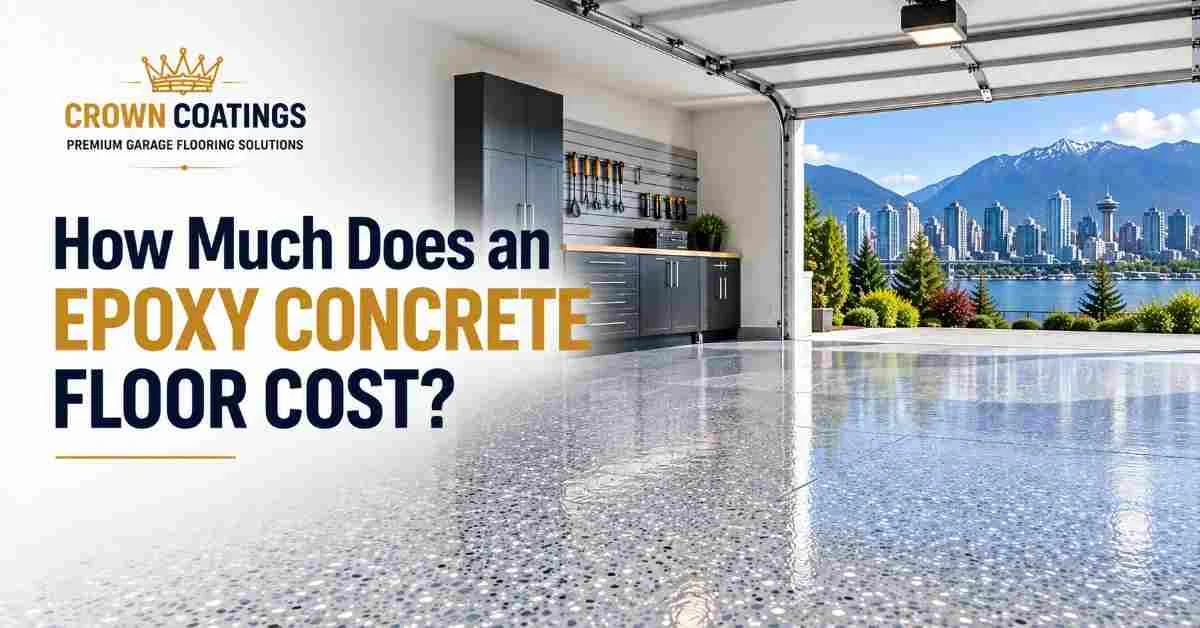
If you are considering an epoxy concrete floor for your garage, basement, workshop, commercial property, or industrial space, one of the first questions you will probably ask is: How much does an epoxy concrete floor cost?
For professional installation in Vancouver and the Lower Mainland, epoxy concrete flooring generally costs $4 to $12 per square foot, depending on the coating system, concrete condition, surface preparation, decorative finish, and project size. Premium or highly customized systems can cost more.
For example, a 500-square-foot floor could cost approximately $2,000 to $6,000, while a 1,000-square-foot project could range from approximately $4,000 to $12,000.
However, the price per square foot only tells part of the story. The condition of your existing concrete and the epoxy system you choose can significantly affect the final price.
In this guide, we’ll explain the typical cost of epoxy concrete flooring, what affects the price, what you should expect to pay for different floor sizes, and how to compare quotes from flooring contractors.
Quick Answer: How Much Does an Epoxy Concrete Floor Cost?
For professionally installed epoxy concrete flooring in Vancouver and the Lower Mainland, a reasonable planning range is:
$4–$12 per square foot
This is a general estimate rather than a fixed quote. A simple floor with sound concrete and a standard coating system may fall toward the lower end, while a damaged floor requiring extensive preparation, repairs, decorative finishes, or a higher-performance coating system may cost more.
| Floor Size | Approximate Epoxy Flooring Cost |
|---|---|
| 200 sq. ft. | $800–$2,400 |
| 400 sq. ft. | $1,600–$4,800 |
| 500 sq. ft. | $2,000–$6,000 |
| 1,000 sq. ft. | $4,000–$12,000 |
| 2,000 sq. ft. | $8,000–$24,000 |
These figures are useful for budgeting, but your actual project price should be based on an assessment of the concrete and the flooring system required.
What Is an Epoxy Concrete Floor?
An epoxy concrete floor is a flooring system installed over an existing concrete slab.
Epoxy is created by combining resin and hardener. Once applied and cured correctly, it forms a durable surface over properly prepared concrete.
Depending on the application, an epoxy flooring system may include:
- Concrete surface preparation
- Crack and joint repairs
- Primer
- Epoxy base coat
- Decorative flakes or aggregates
- Additional coating layers
- Protective topcoat
This is why two floors with the same square footage can have very different installation costs.
The quality and preparation of the complete flooring system matter just as much as the epoxy product itself.
Epoxy Concrete Floor Cost by Project Size
The easiest way to estimate your potential investment is to start with the size of the floor.
200 Square Feet
A 200-square-foot floor could cost approximately:
$800–$2,400
This might apply to a small workshop, basement area, utility space, or compact garage.
Smaller projects can sometimes have a higher effective cost per square foot because setup, preparation, equipment and labour are spread across a smaller area.
400 Square Feet
A 400-square-foot floor could cost approximately:
$1,600–$4,800
This is a common size for smaller garages, workshops and residential areas.
The condition of the concrete can make a significant difference. A clean slab with minimal repairs will generally require less preparation than an older floor with cracks, oil contamination or an existing coating.
500 Square Feet
A 500-square-foot epoxy floor could cost approximately:
$2,000–$6,000
This size is common for residential garages and smaller commercial spaces.
The final price will depend on whether you choose a basic solid-colour system, decorative flake finish, metallic appearance, or another specialized system.
1,000 Square Feet
A 1,000-square-foot floor could cost approximately:
$4,000–$12,000
This size is more common for larger garages, workshops, retail spaces, offices, warehouses and commercial facilities.
Larger projects may benefit from installation efficiencies, although extensive concrete preparation or specialized performance requirements can increase the total investment.
What Factors Affect the Cost of an Epoxy Concrete Floor?
The square footage is only one part of the calculation. Several other factors can affect your final epoxy flooring price.
1. Condition of the Existing Concrete
The condition of the concrete is one of the most important cost factors.
Newer, clean and structurally sound concrete may require relatively straightforward preparation.
Older concrete may have:
- Cracks
- Pitting
- Spalling
- Oil contamination
- Existing coatings
- Uneven areas
- Surface damage
- Moisture problems
These conditions may require additional preparation or repair before epoxy can be installed.
A contractor should evaluate the concrete before determining the appropriate flooring system.
2. Surface Preparation
Professional surface preparation is critical to the performance of an epoxy floor.
Preparation may involve mechanical grinding, cleaning, repairing cracks and removing contaminants or previous coatings.
If preparation is skipped or performed poorly, the coating may not bond correctly to the concrete.
This can lead to problems such as:
- Peeling
- Blistering
- Bubbling
- Premature wear
- Uneven appearance
For this reason, comparing epoxy quotes based only on the lowest price per square foot can be misleading.
3. Type of Epoxy System
Not every epoxy floor is the same.
A basic solid-colour coating is generally less expensive than a multi-layer decorative or high-performance flooring system.
Common options include:
- Solid-colour epoxy: A practical option where appearance and durability are important without additional decorative effects.
- Flake epoxy: Decorative flakes are broadcast into the coating to create texture and visual depth. This is particularly popular for garages and utility spaces.
- Metallic epoxy: Designed to create a more decorative, high-end appearance using metallic pigments and specialized application techniques.
- Heavy-duty epoxy systems: Designed for environments exposed to higher traffic, equipment, chemicals or demanding operating conditions.
The intended use of the floor should determine the system rather than simply choosing the cheapest option.
4. Decorative Finish
Decorative features can increase the overall cost.
For example, a simple solid-colour floor generally requires fewer materials and application steps than a decorative system involving flakes, metallic pigments, quartz or multiple layers.
If appearance is an important consideration, your contractor can help you compare the additional cost with the desired finish.
5. Moisture Conditions
Moisture can be a significant consideration when coating concrete.
If moisture is moving through the slab, installing an epoxy system without addressing the underlying problem can result in coating failure.
Basements and certain slabs may require additional moisture testing or mitigation.
This is one reason an on-site assessment is important before installation.
6. Size and Layout of the Space
A large, open floor can be relatively straightforward to prepare and coat.
A smaller or complicated space with:
- Columns
- Equipment
- Drains
- Multiple rooms
- Tight access
- Numerous edges
- Existing fixtures
may require additional labour.
The actual layout of the floor can therefore influence the final price.
7. Repairs and Additional Work
Concrete repairs are not always included in a basic per-square-foot coating price.
Depending on the floor, additional work may include:
- Crack repair
- Joint repair
- Concrete patching
- Removal of old coatings
- Oil or chemical contamination removal
- Moisture mitigation
- Additional grinding
Ask your contractor what preparation and repairs are included in the quoted price.
Is Epoxy Concrete Flooring Worth the Cost?
Epoxy flooring can provide several practical advantages over an unfinished concrete slab.
A properly installed epoxy system can provide:
- A seamless appearance
- Easier cleaning
- Protection against many common stains
- Improved resistance to everyday wear
- Decorative customization
- Reduced concrete dusting
- A more finished appearance
However, epoxy is not automatically the right solution for every floor.
Moisture, UV exposure, concrete movement, surface preparation and the intended use of the space all need to be considered.
For a more detailed discussion of potential limitations, see our guide: What Are the Downsides of Epoxy Concrete Floors? Pros & Cons to Know
Epoxy Concrete Floor vs. Polished Concrete: Which Costs More?
Epoxy and polished concrete are two different approaches to finishing an existing concrete floor. With polished concrete, the existing concrete itself becomes the finished surface through grinding, honing and polishing.
With epoxy, a coating system is installed over the prepared concrete. The cost difference depends on the specific system, condition of the slab, desired finish and preparation requirements.
If you’re deciding between the two, read our detailed comparison: Epoxy vs. Polished Concrete: Which Flooring Option Is Best for Your Space?
The right choice depends on more than the initial price. The environment, appearance, maintenance requirements, traffic level and condition of the concrete should all be considered.
DIY Epoxy vs. Professional Installation
DIY epoxy kits can appear considerably cheaper than professional installation.
However, the material itself is only one part of an epoxy flooring project.
Professional installation typically involves:
- Inspecting the concrete
- Preparing the surface
- Grinding or mechanically profiling the concrete
- Repairing suitable cracks and damaged areas
- Applying the appropriate coating system
- Adding decorative materials if required
- Applying protective coats where appropriate
- Allowing the system to cure properly
The most common mistake with DIY epoxy flooring is focusing on the coating product while underestimating surface preparation. If the concrete is not properly prepared, even a good-quality coating can experience adhesion or performance problems.
For a garage or small low-risk area, a DIY project may be worth considering for an experienced homeowner. For commercial, industrial or high-traffic environments, professional installation can provide greater control over preparation and system selection.
How to Compare Epoxy Flooring Quotes
When you receive multiple quotes, don’t compare them based only on the price per square foot.
Instead, ask each contractor what is included.
Your quote should clearly explain:
- Square footage
- Type of epoxy system
- Number of coats
- Surface preparation method
- Crack and concrete repairs
- Primer requirements
- Decorative flakes or aggregates
- Topcoat
- Moisture testing or mitigation
- Labour
- Expected installation timeline
- Warranty, if applicable
For example, a $5-per-square-foot quote and a $9-per-square-foot quote may not actually represent the same flooring system.
The less expensive quote could exclude preparation, repairs or a protective topcoat. Understanding the complete scope of work makes it easier to compare proposals accurately.
How Long Does an Epoxy Concrete Floor Last?
The lifespan of an epoxy floor depends on several factors, including:
- Quality of the flooring system
- Concrete preparation
- Installation quality
- Traffic levels
- Exposure to chemicals
- UV exposure
- Maintenance
- Environmental conditions
A professionally installed epoxy floor can provide many years of service when the appropriate system is selected, and the concrete is properly prepared.
The expected lifespan should therefore be considered together with the initial installation cost.
Can You Put Epoxy Over Old Concrete?
Yes, epoxy can often be installed over existing concrete, provided the concrete is suitable and properly prepared.
However, existing concrete should be inspected first.
Old floors may contain:
- Oil
- Grease
- Paint
- Previous coatings
- Cracks
- Moisture
- Surface deterioration
These conditions may require additional preparation before a new epoxy system can be applied.
Simply cleaning an old concrete floor and rolling epoxy over it is not equivalent to professional surface preparation.
Does Epoxy Increase the Value of a Property?
Epoxy flooring can improve the appearance, functionality and usability of a garage, commercial space, workshop or other concrete area. However, there is no universal dollar amount that an epoxy floor will add to a property’s market value.
The benefit is often more practical: a clean, durable and easier-to-maintain floor can make a space more functional and visually appealing.
For commercial properties, the appropriate flooring system can also help support operational requirements such as durability, cleaning and traffic resistance.
Get an Epoxy Concrete Flooring Estimate
There is no single price for every epoxy concrete floor. A small, clean concrete floor with a straightforward coating system can cost considerably less than a large commercial floor requiring extensive preparation, repairs and a high-performance finish.
For a useful estimate, the most important information includes:
- Floor dimensions
- Location
- Current concrete condition
- Intended use
- Desired finish
- Any existing coatings or damage
At Crown Coatings, we provide epoxy flooring solutions for residential, commercial and industrial applications throughout Vancouver, Surrey, Langley, Richmond, Abbotsford and surrounding areas.
If you’re planning an epoxy concrete floor, contact Crown Coatings to discuss your project and determine which flooring system is appropriate for your space.
Frequently Asked Questions
How much does an epoxy concrete floor cost per square foot?
Professionally installed epoxy concrete flooring in Vancouver and the Lower Mainland can generally cost approximately $4–$12 per square foot, depending on the flooring system, concrete condition, preparation and finish.
How much does a 500 sq. ft. epoxy floor cost?
A 500-square-foot epoxy floor could cost approximately $2,000–$6,000 based on a $4–$12 per-square-foot planning range. The actual price depends on the condition of the concrete and the system selected.
How much does a 1,000 sq. ft. epoxy concrete floor cost?
A 1,000-square-foot epoxy floor could cost approximately $4,000–$12,000. More specialized systems or floors requiring extensive repairs may cost more.
Is epoxy flooring cheaper than polished concrete?
Not necessarily. The cost of both systems varies according to the condition of the concrete, preparation requirements, finish and project size. The two systems also work differently and should be compared based on the needs of the space rather than price alone.
What makes epoxy flooring more expensive?
Major cost factors include extensive concrete preparation, repairs, moisture mitigation, decorative finishes, multiple coating layers, specialized materials and difficult site conditions.
Is professional epoxy flooring worth it?
Professional installation can be particularly valuable when the floor requires extensive preparation, will experience heavy traffic, or needs a specialized flooring system. Proper preparation and system selection are important factors in long-term performance.


