

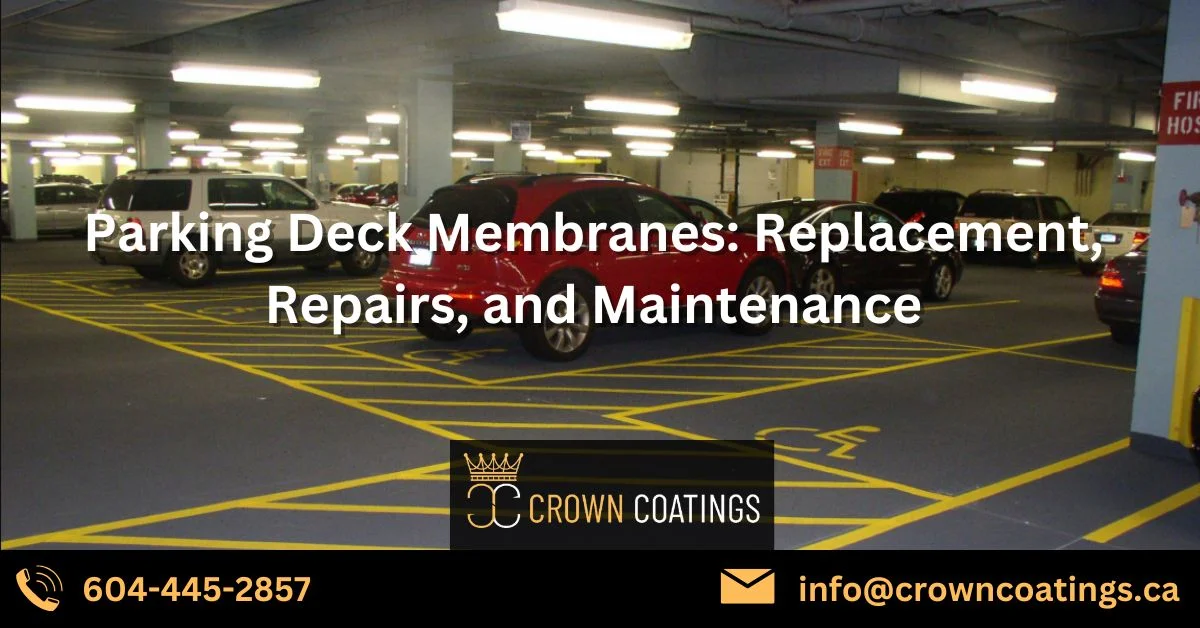
Parking deck membranes are critical for protecting concrete structures from water damage, chemicals, and heavy traffic.
But here’s the real question property owners ask:
👉 When should you repair vs replace a parking deck membrane?
This guide breaks down everything you need to know—so you can avoid costly structural damage and extend your deck’s lifespan.
🏢 Why Parking Deck Membranes Are Essential
Parking structures face constant stress from:
- Weather Exposure: Rain, snow, and freeze-thaw cycles cause cracks and water infiltration
- Chemical Damage: De-icing salts, oil, and fuel corrode concrete and steel reinforcement
- Heavy Traffic Loads: Continuous vehicle movement leads to wear and surface breakdown
👉 A high-quality membrane acts as a protective barrier, preventing long-term structural damage.
⚠️ Signs You Need Membrane Replacement
If your membrane is severely damaged, replacement is often the best solution.
Key warning signs:
- Visible cracks and water leaks
- Widespread delamination (peeling or separation)
- Rust stains or corrosion of reinforcement
- Persistent water pooling
👉 Ignoring these signs can lead to expensive structural repairs.
🔄 Parking Deck Membrane Replacement Process
A professional replacement typically involves:
1. Inspection & Assessment
Experts evaluate the extent of damage and recommend the best solution.
2. Surface Preparation
- Removal of old membrane
- Crack repairs and surface leveling
- Proper cleaning and grinding
3. New Membrane Installation
- Application of advanced systems (epoxy, polyurethane, or polyaspartic)
- Multi-layer protection for durability and waterproofing
👉 A full replacement can extend your deck’s life by 10–20 years.
🛠️ Parking Deck Membrane Repairs
If damage is localized, repairs can restore functionality at a lower cost.
Common repair methods:
- Crack Injection: Sealing cracks with epoxy or polyurethane resins
- Overlay Systems: Adding a protective layer over existing membrane
- Joint Repairs: Fixing expansion joints to prevent leaks
👉 Repairs are faster and more cost-effective for minor issues.
⚖️ Repair vs Replacement (Quick Comparison)
| Factor | Repair | Replacement |
|---|---|---|
| Cost | Lower | Higher upfront |
| Time | Faster | Longer process |
| Lifespan | Short to medium-term fix | Long-term solution |
| Best For | Minor/localized damage | Severe or widespread damage |
🧰 Maintenance: Extend Membrane Lifespan
Regular maintenance can prevent costly replacements.
Key maintenance practices:
- Routine Cleaning: Remove debris, oil, and chemicals
- Annual Inspections: Check for cracks, leaks, and wear
- Reapplication of Sealers: Strengthen waterproofing layer
- Fix Issues Early: Address small cracks before they spread
👉 Proper maintenance can double the lifespan of your membrane system.
🏆 Why Choose Crown Coatings?
Crown Coatings specializes in parking deck membrane systems across commercial and industrial properties.
What sets us apart:
- Expert inspections and diagnostics
- Premium-grade materials (epoxy, polyaspartic systems)
- Efficient, low-disruption installation
- Customized maintenance plans
📞 Get Expert Parking Deck Solutions
Whether you need repairs, replacement, or preventive maintenance, choosing the right contractor is critical. 👉 Contact Crown Coatings today for a professional assessment and customized solution to protect your parking structure.
❓ FAQs
How long do parking deck membranes last?
Typically 10–20 years depending on usage and maintenance.
Can a damaged membrane be repaired?
Yes, if the damage is minor. Severe damage usually requires replacement.
What is the best material for parking deck membranes?
Polyurethane and polyaspartic systems are commonly used for durability and waterproofing.


